
[English Version] Where Does The Value Of Gold Watches And Clocks Come From?

〈GMT KOREA〉 spoke with watch and clockmakers as well as horological experts from around the world to explore the value of gold as a material today.
What comes to mind when you see a gold watch? At times, people are drawn to gold more than to any other material or gemstone. Its classical heritage, the historical value proven across centuries, and its beautiful glow reminiscent of the sun often captivate people, immersing them in what is commonly described as a “timeless” sensibility.
In both art history and horological history, gold can be interpreted in many different ways. In particular, it carries strong symbolism from the perspectives of human affinity and decorative aesthetics. For this reason, gold objects were often collected by royal families and those who sought to embody authority and prestige. Within the watch industry as well, gold holds different meanings depending on who is considering it—whether watchmakers, horological specialists, or economists.
But what does gold mean to collectors today? Last year, gold prices closed the year after approaching record highs, reflecting one of the strongest annual upward trends in history. As global political instability and inflation concerns continue, the perception of gold as a long-term safe-haven asset has grown even stronger. Although gold prices have fluctuated this year, moving up and down with increasing volatility, the demand for gold is unlikely to fade easily as long as global economic uncertainty and geopolitical tensions remain unresolved.
This trend has inevitably influenced the watch industry as well, since many collectors approach watches from an investment perspective. In particular, such collectors will likely pay closer attention to the gold content used in watches, the type of gold alloy, and the intrinsic value embedded in the material itself.
That said, the value of a gold watch shaped by a brand’s heritage and the artistry of skilled craftsmanship exists on a very different plane from the fluctuations of the gold market. Collecting cannot be sustained solely through the lens of investment value. If one considers whether a watch’s meaning remains constant over time and whether it resonates with one’s personal direction in life, the rise and fall of prices may ultimately become less important.
Yet, in an era when the very concept of assets is rapidly evolving, it may not be easy to determine how we should view gold watches going forward. With this in mind, <GMT KOREA> team turned to watch and clockmakers as well as horological experts from Switzerland, France, Germany, Japan, and Denmark, recognizing that gold is a key material intertwined with the movements of the global economy. We asked them to share their personal insights on gold watches.
Rather than purchasing watches merely as an investment strategy driven by sharply rising or falling gold prices, we hope readers will reflect on a more meaningful philosophy of collecting gold watches through the perspectives of these figures. Their advice is also included here and may serve as a valuable guide for collectors seeking the right direction.

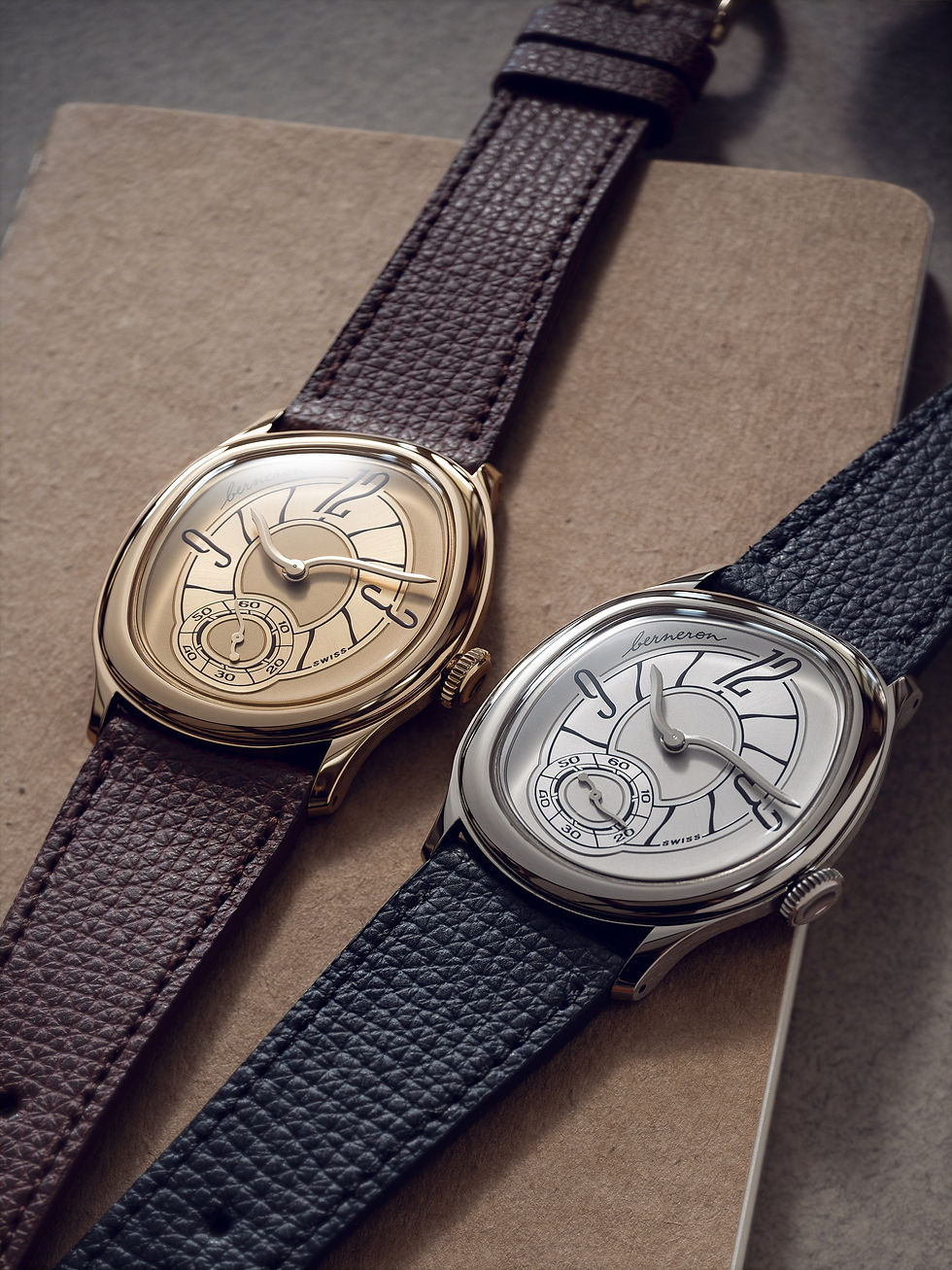

SYLVAIN BERNERON
Founder of a Switzerland-based watch brand
“To me, gold can be summarized in two words: nobility and timeless.”
What does gold mean as a material in watchmaking?
Noble and timeless. These are the two words that come to my mind when I think about gold watches. And this is especially important for a mechanical watch, which will have a very long life span and will need to be maintained, fixed, refurbished, passed on, etc.
What personally attracts you most about working with gold?
At Berneron, we make our movements exclusively in 18k gold for the following reasons:
• Strength With a hardness of around 170 Vickers (HV), gold offers ideal structural integrity.
• Magnetism Gold is not magnetic by nature, which helps protecting the sensible components in the movement from daily magnetic fields.
• Finishing Used by jewelers for centuries, gold is THE material of choice to achieve the highest level of finishing, thanks to its natural depth and luster.
Do you have a preferred gold alloy?
Choosing alloys is a very personal choice, of course. Personally, I use only 3N and 4N tints when it comes to yellow gold, because they look fantastic and also are very durable. I avoid 5N (rose gold) and 6N (red gold) tints because they contain too much copper for my liking, which is prone to corrosion and will change the color of the alloy over time. For white gold, I use only the highest grade Au750-Pd210, which contains 75% of fine gold and 21% of palladium. It is very expensive to work with, but it is the only tint of white gold (unlike Pd125 and Pd150) which doesn't require a rhodium plating on top.
What principles are most important when working with gold, and what aspects require particular attention during the manufacturing process?
The initial commitment to use a certain type of alloy is the most fundamental choice, in my opinion. It is a crucial decision which dramatically impacts the cost of manufacturing, of course, but when done properly, it creates watches like no others, which look amazing, feel very good on the wrist, and are very durable. A hard decision to make, but worth every penny, in my opinion.
What advice would you give to collectors choosing a gold watch?
In my opinion, precious metal watches are the hardest to acquire because you need to have the technical knowledge to acquire wisely: I would suggest to start with a dress watch, because they are smaller and thinner, so they need less gold and are more likely to be constructed properly (no drilled pockets inside or construction cheats to diminish the weight of gold used). You need to know the precise alloy used. For me, 18k or Au750 (75% of fine gold on the alloy) is a must because this is where gold can provide its benefits.


ALEXIS FRUHAUFF
French clockmaker
“Gold is not a material that exists to create value. Value follows afterward.”
What does gold mean as a material in clockmaking?
For me, the most beautiful clocks are those that incorporate a subtle use of gold. A clock is above all a convergence of crafts. The clockmaker gives the breath, the dial maker gives the face. The cabinetmaker gives the architecture, while the bronzesmith gives the presence. It is the meeting of these skills that creates the artwork. It is not the material itself that defines quality, but the work of the hands that shape it. A metal, a wood, an enamel become noble only through the rigor, precision, and intelligence of those who transform them.
Gold is not there to create value. It comes afterward. It highlights, reveals, illuminates. It is almost a rule of elegance: When the entire clock is refined down to the smallest detail, gold can be rare. Conversely, it can become a compensation used to conceal an object’s weakness. Gold elevates because it contrasts. It should not dominate.
A successful clock is not the one that shines the most, but the one in which each craft expresses itself with accuracy, and where gold simply signs the harmony of the whole. As a modern example, if we briefly move away from gold, we see many pieces that are entirely polished, whether in brass, steel, and so on. Shine can create the illusion of great care, just as gold can be used in a mediocre piece to mask its shortcomings. True nobility comes neither from brilliance nor from the quantity of precious material, but from the coherence and rightness of the whole. In the end, one could conclude that elegance is born from contrast.
What principles are most important when working with gold?
Rose gold can be used to manufacture watch wheels, replacing brass or copper-beryllium wheels in more modern timepieces. Thanks to its copper content and the effects of work hardening, meaning the process of strengthening the material by compressing it, rose gold can achieve sufficient hardness to work effectively with polished steel pinions. This results in a good coefficient of friction, very little wear, and above all, no need to gold-plate the wheel, since being made of gold it will not oxidize over time. During machining, one must aim to produce as few chips as possible, carefully collect them all, and use kerosene as a cutting fluid when turning or milling, as gold is a metal that tends to stick to cutting tools.
Gold is also used, for example, to make detent springs. It is a ductile and malleable material that also limits wear. It is self-lubricating when paired with steel. Surface treatments can also be applied to watch and clock plates to prevent oxidation. I have read in a book that, in historical horology, certain plates and bridges were gilded, which allowed oil to remain longer in its oil sink through the capillary effect provided by the gilding. Oil management was the primary concern in early horology of that period. Mechanically, gold remains rarely used because it is too expensive and, in most cases, provides very limited mechanical benefits. One may note the bold choice of François-Paul Journe in creating his calibers in rose gold.
What advice would you give to collectors choosing a gold clock?
One should not choose a clock based on the gold it may contain. More generally, if there is gold, it likely means there are gilt bronzes adorning the clock. One must first assess the quality of the bronzes, examining the finesse and the quality of the chasing work. One can then look at the type of gilding used, particularly the method employed historically before it was banned in France. Mercury gilding is the most beautiful and the most durable over time. It offers the possibility of creating attractive contrasts between matte and polished surfaces, and its color is also highly distinctive.


CHRISTIAN LASS
Danish watchmaker
“Gold expresses layers of history, ritual, and value within the small object of a wristwatch.”
What does gold mean as a material in watchmaking?
What gold means as a material in watchmaking Gold is more than a metal, it’s a language. It carries history, ritual, and value in a compact object you can wear. Metallurgically, gold is stable, non-corroding, and highly workable qualities that let us execute fine finishing and delicate shapes when soldering without them. Culturally, it signals quality and importance, but it also communicates a maker’s intention to craft something that is meant to last. Emotionally, gold has warmth and presence on the wrist that changes with light and wear; that interaction between material and human gives the watch its living quality.
What personally attracts you most about working with gold?
Gold is a very nice material to work with, and it gives an amazing result in the end when it’s done right. It’s also a challenging task, and you can quickly lose a lot of money if it goes wrong. Therefore, it makes you focus intensely and demands you are doing your very best in order to succeed.
Do you have a preferred gold alloy?
I tend to favor rose gold for its balance of warmth and versatility, but the choice is context-driven. Rose gold has an organic warmth that goes well with Nordic skin tones and pairs beautifully with both vintage and modern designs. It reads less overtly “precious” than bright yellow gold but keeps a sense of heritage. Another favorite of mine is white gold; it’s clean and contemporary. Our first 30CP was white gold as a tribute to the Danish tradition, which is very clean and understated.
What principles are most important when working with gold, and what aspects require particular attention during the manufacturing process?
It’s important to think about the relation between material and design. The material must serve the design’s intention, and the design must respect the material’s properties. Practically, that means designing for thicknesses, tolerances, and finishes that suit gold’s softness and malleability. If you want a good result, then the case has to be made from forged material; casting is not a good choice. A casting is internally full of thousands of small holes and is very soft. Also, price is a major consideration. The cost for purchasing and manufacturing the watch case is very high compared to a stainless-steel watch. But when I see and feel the final result, then it’s all worth it.
What advice would you give to collectors choosing a gold watch?
It’s all a matter of preference. I think it’s most important to go with something that resonates with you as a collector.


NAOYA HIDA
Founder of a Japanese watch brand
“In the simplest sense, gold is the most beautiful and suitable material for creating luxury watches.”
What does gold mean as a material in watchmaking?
For me, gold is, quite simply, the most beautiful and the most suitable material for crafting luxury watches. I am aware that some people view gold from an investment standpoint, but that perspective does not apply to us. In fact, the current surge in gold prices has become something of a headache for our work. Gold does not corrode under normal conditions and can retain its beauty for an exceptionally long time. Its ideal balance of hardness, weight, and workability is something no other material can offer.
What personally attracts you most about working with gold?
Gold—especially 18K gold—can produce an astonishing variety of colors depending on the metals blended with it. Even within what we simply call “yellow gold,” the spectrum ranges from pale, almost whitish tones to deeper hues with a slight reddish tint. In the case of white gold, there are surprisingly many options as well: one can apply rhodium plating, or instead mix in palladium to achieve a naturally grayish tone without plating. A gold watch—when the right alloy is chosen, thoughtfully designed, and finished through various techniques—possesses a presence that materials like stainless steel or titanium simply cannot replicate. The distinctive weight when held in the hand, the uniquely soft and almost indescribable tactile feel—these qualities create an atmosphere that is truly one of a kind. This is precisely why I find gold so compelling.
Do you have a preferred gold alloy?
I genuinely appreciate all kinds of gold.
What principles are most important when working with gold, and what aspects require particular attention during the manufacturing process?
The design must be timeless. The case should be constructed as solidly as possible, with enough thickness to allow for proper polishing even many years down the line.
What advice would you give to collectors choosing a gold watch?
I believe one should choose a model they truly love. It may be far removed from an investment-driven mindset, but that is how I have always approached it myself.


STEFAN KUDOKE
German watchmaker
“In watchmaking, gold symbolizes culture.”
What does gold mean as a material in watchmaking?
In watchmaking, gold is far more than a precious metal – it is a cultural statement. For centuries, it has stood for permanence, value, and dignity. In classical haute horlogerie, gold has always been the preferred material for important pieces because it is not only precious, but also exceptionally workable.
For me, gold represents one thing above all: warmth and vitality. Steel feels technical, platinum feels cool and heavy – gold, by contrast, has an organic presence. It reflects light in a very soft, almost poetic way. Especially in hand-engraved or skeletonized works, it reveals a depth that other materials cannot achieve in the same way.
What personally attracts you most about working with gold?
What fascinates me most is the combination of tradition and malleability. Gold allows for extremely delicate engraving and a wide variety of surface finishes. For someone like me who places great importance on craftsmanship, this is essential. Gold is never forgiving as a material. Every line, every polish, every edge is fully revealed. At the same time, it responds instantly to light. When I observe a hand-engraved dial or balance bridge made of gold under a microscope, I often feel as if I am looking not at a mechanical component, but at a sculptural work of art.
There is also an emotional dimension. Gold ages with dignity. As it develops a patina over time, it never loses its essential character.
Do you have a preferred gold alloy?
Personally, I have a strong affinity for rose gold. Rose gold possesses a special warmth that harmonizes beautifully with classical finishing. It enhances engravings and traditional forms without becoming dominant. Especially in combination with a finely decorated movement, it creates a very balanced overall impression. Yellow gold is the epitome of classical watchmaking – very historical, very traditional. White gold appears more restrained, more modern, and slightly more technical. But for me, rose gold achieves the perfect balance between history and contemporary aesthetics.
What principles are most important when working with gold, and what aspects require particular attention during the manufacturing process?
For me, the most important principle is: gold must never be an end in itself.
A watch must not convince solely through its material. Gold should support the construction, the architecture of the movement, and the craftsmanship – not overshadow them. Gold reveals every imperfection immediately. Therefore, precision in execution is crucial. Especially with handcrafted components, every line must be placed with intention.
What advice would you give to collectors choosing a gold watch?
From a collector’s perspective, I would emphasize three criteria:
• Substance over material value: Gold alone does not make a great watch. What matters is the quality of the movement – its construction, finishing, and originality.
• Authenticity: Is the design coherent? Is the material used meaningfully? Or is it merely a prestige element?
• Long-term emotional connection: A gold watch is worn differently than a steel watch. It is more personal, more intimate. One should ask:
Will this watch still speak to me in ten or twenty years?
A truly great gold watch is not loud. It possesses a quiet sovereignty – and that is exactly what a collector should look for.
![[English Version] Berneron Questions the definition of the 21st-century watch](https://static.wixstatic.com/media/bd93d4_f50fec7e4e3949b28898b2f981c0f65f~mv2.jpg/v1/fill/w_980,h_980,al_c,q_85,usm_0.66_1.00_0.01,enc_avif,quality_auto/bd93d4_f50fec7e4e3949b28898b2f981c0f65f~mv2.jpg)

댓글